Bilješka autora
Zagrebački dekameron zbirka je priča od novela lakih koje nepretenciozno troše vrijeme kao hobi jedne duše koja provodi večeri uz poeziju pera od tipki što kotrljaju riječi. Ako ste pismenost svoju uzdizati stali i razumijete se u zadovoljstva razna, podarite si trud i pročitajte ovaj proslov od riječi, ter odlučite vrijedi li vam virit 'Proslov od zrna bibera' kroz ključanicu ili otvorit' škrinjicu u koj' blago se krije.
© Proslov od zrna bibera
© Il Testamento
Postoji li svaka sličnost sa likovima i prilikama raznim u koje vas život dovede te je li ona namjerna ili slučajna, to zaključite sami. Želite li iz bilo kojeg razloga autora pohodit' kliknite na spojku preko koje se sa autorom brzo opći:
mail search:
bocacciozg@yahoo.com
Popevke sem slagal i rožice bral i Zagrebu samo ja mladost sem dal. Samo za purgere i one koji Zagreb u srcu nose i time se fest ponose.
© Zagrebačke priče: Posljednji fijaker
© Zbudimo se purgeri
© Priča iz Saloona
© Duhanski put
© Pimpek plac
© Zrinjevac
© Republika peščenica
© Adventske špelancije
© Zagreb, Amerika u malom
© Zagrebačke sponzoruše
© Mekon
© Something stupid ...
© Đukica
© We will rock you
Tematska svaštara od niske priča, crtica i novela koje meštar Bocaccio ispriča i odasvud ih skupi u kolekciju zbirke kao spomen na ljudski um koj' istovremeno veleban je, al' ponekad i glup jest, a sve to bez pretenzije da konačnu pouku smjerniku on da.
© Ukratko iz Nairobija ...
© Advent u Nairobiju ...
© Prvi mačići se red blogere bacaju ...
© Sve što ste željeli znati o safariju, a niste se usudili pitati ...
© Sva čuda svijeta ...
© Cheri Cheri Lady ...
© Pit i to je Amerika ...
© Chicago - my kind of town ...
© Born to be Wild ...
© From Moscow with love ...
© Space oddity - part 1 ...
© Space oddity - part 2 ...
© Meeting with the Boss ...
© Corridrs of Time (Newgrange)...
© Irske razglednice ...
© Belfast 55 ...
© Čuvar Irske u zimskom razdoblju ...
© Paris latinos ...
© Proud to be Scotch ...
© Legenda o Sretnom Princu na dvoru Kralja Artura ...
© Piratice s Kariba ...
© Stockholmske vertikale i paralele ...
© Galebovi u slici i riječi ...
© Heidelberg - Stars on 45 ...
© Geiles Leben ...
© Domovina u slučajno nabacanim fotografijama ...
© Gastronautika u pregršt fotografija ...
© Gastronat - Stars on 45 ...
© Moja najljepša priča
Copyright © by Bocaccio, Zagreb
Jedna tematska niska priča i crtica ikoje meštar Bocaccio ispriča i odasvud ih skupi u kolekciju zbirke bez pretenzije da nešto posebno pametno on veli, već samo da vas zabavi.
© Vožnja je strast
© Coolest things in the world
© Mercedes-Benz
© Snovi
© Pet razloga zašto se šveđanke ne boje zime ...
© Švedski brendovi u slici i riječi ...
© Ja się boję sama spać
© I mi konja za trku imamo
Copyright © by Bocaccio, Zagreb
Niska od basni raznih koja poduči, zabavi i k tomu jošte na načine razne korisna bude biti može, jer napuni i izdovolji i trbuh i tijelo i um ljudski raznim radnjama zadovolji. I sve to baš onako kako na životinjskoj farmi priliči i na njoj treba biti, a koje se pametan čovjek ponekad razložno valja kloniti.
© Večernja škola
© Dvije i po basne
© Tata ti me voliš
© Božićne priče za velike i male
© Re-Make Re-Model: To Be or Not To Be
© IzPonova
© Ljubitelji životinja u policijskoj stanici 666
© Ljevica i desnica u vrijeme adventa ...
Copyright © by Bocaccio, Zagreb
Balduccijev brevijar
• Sve što ste željeli znati
• Victor i njegova družba
• Majstor Martin i Margarita
• Alexov svijet ljepotica
• Daniel bez Daniele
• Objašnjenja nisu potrebna
• Occupazione: Fotografo
• Svaka slika priča priču
• Vizualnost jedne Marine
• Stav jednog fotografa
• Sveto ime Thomas
• Srebro je zlato
• Let's paint together
• Što reći o legendi?
• Ljepotice Madamme Olge
• Kako to rade drugi
Znate li zašto proroci uvijek umiru mladi? Ein Erinnerung an die Beste der Besten:
• Thomas Karner, ein Fotograf aus Wien
Edited by Bocaccio, Zagreb
subota, 01.06.2013.
Space oddity - The coolest mankind oddity of all times (part 2)

Ladies and gentlemen, for those who have been missed, here is the link to the first part of a story:
http://zagrebackidekameron.blog.hr/2013/05/1631652565/space-oddity-the-coolest-mankind-oddity-of-all-times-part-1.html
This is the second part of a story about a man and his amazing and beautiful dream, to touch stars with his hand. The story is illustrated with photos of original artifacts saved in the Space Museum in Moscow, Prospekt Mira 111. Furthermore, the story is illustrated with images taken from the Internet and films recorded in the space. This episode presents some of the most remarkable creations mankind has ever created, Space Orbital Stations or as we used to say Artificial Satellites.
The beginnings:
Salyut 7 (19.04.1984. - 07.02.1991.)

After the success of Apollo and the disaster with Skylab, Americans decided to close their space program. But in this topic, the Soviets were more systematic and continued with the orbital space station program in exact and programmed steps. In mid 80ies after Salyut, the Soviets launched the Mir orbital space station which was, in three phases, cruising in orbit around the Earth for an amazing and long-lasting 15 years. To support the program, the Soviets made enormous efforts in constantly maintaining and repairing, supplying stations with utilities, food, and consumables. This resulted in the cosmonauts constantly living in the space. Orbital space station Mir set up the first man record in continuous living in space. Russian cosmonaut Valery Polyakov on his second flight in 1994/1995 stayed in the station for almost a year and a half. Precisely he stayed there 437 days and 18 hours.
Orbital space station Mir was realized in three phases. In the first, Soviet, phase (1986 – 1991) Mir was home for Soviet cosmonauts only. In each shift, only one of the three cosmonauts was changed with another. To enable the mission, the Soviets organized a constant transportation path served by a lot of space crafts and flights that supplied the human crew with food and the orbital station with spare parts. Contrary to their robotic-driven space vehicles responsible for food and utility supply as well as garbage collection on return to the Earth, cosmonauts were transported with classic Soyuz space crafts. To enable functions for such a complex system, the Soviets founded the first mass spacecraft production (industry) for operational rockets, orbital station spare parts, and all other utilities required not only for maintaining machines but for serving human supplies, as well. Yes, the Soviets lost the Space Race but ... they have not been beaten in completely. Americans send the first man to the Moon. Starting from Apollo 11 to Apollo 17, the task equal showing superiority of each expedition was to walk around the Moon to collect samples of Moon ground and stones. But as presented in the previous episode, the Soviets responded with the first spacecraft which took Moon samples and returned them to the Earth. Immediately afterwards this success they send the first-ever build robotized vehicle to explore the Moon's surface. They called the robot “lunokhod” and trained it on the Earth to carry out the mission on the Moon. As such this becomes the very first and practical implementation of what we call Artificial Intelligence. Lunokhod was capable of moving completely independently around the Moon to ensure all of his given functions.
In the meantime, the Soviets opened a new era in space. In parallel, from Salyut 1 to Salyut 5 they collected experience and developed technology to join the first two and later several Soyuz space crafts and other modules in building a space station where humans will be able to live permanently. Such in the second half of the 70ies they launched Soyuz 3 space crafts and a central, command module from which the first orbital space station with a permanent presence of humans was assembled. Of course, learned from the experience of the lost Moon race against the Americans, the Soviets kept activities secret and announced them only after final success.
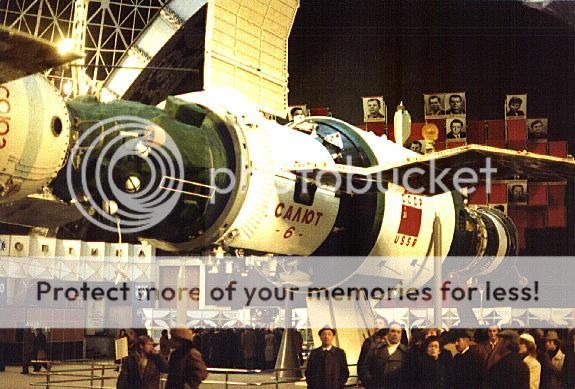
The first Soviet space orbital station Salyut 6 was cruising around the Erath with an average speed of around 28 thousand kilometers/hour relative to the speed of the Globe. This orbital space station lasts for almost five years. Below are photos from the first Soviet space exhibition in the USSR on their technical and technological advances in Space programs. The second Soviet orbital station Salyut 7 was designed to last even more, almost 7 years.

Space suit model for Soviet cosmonaut in 70ies

Space suit model for Soviet/Russian cosmonaut in 1980ies/1990ies/2000ies
In the 70ies, as a kind of continuation and replacement for the Apollo program, Americans made the step into space orbital station development. The name of the project was Skylab. Compared to the Soviets whose experiments were closed to the public, Americans did a kind of TV show to advertise their advanced technology and superiority but … Skylab was seriously damaged when launched from the Earth to open space with a Saturn rocket and therefore served only for few very limited short-term human staying. Finally, in the year 1979, Americans landed Skylab, and this was practically the end of their Space program.
The world in the 80ies was preoccupied with the “cold war” between two superpowers but regardless of that, superpowers started space collaboration using the ongoing Soviet space station program. Here is the space suit of American astronaut Michel Collins who was participating in the Soviet space program as a guest. And would you believe Michel was one of the few who were walking on the Moon in the Apollo program? The artifact is exhibited in the Space Museum in Moscow.

Salyut Space Orbital Station exhibited in Space Museum Memorial Park in Moscow, Prospekt mira 111.

What you see above is the original artifact of the first space station, model Salyut 6. And what can I tell about this” bastard” 36 years after but it's the beauty and the beast at the same time? Magnificent!
The typical space orbital station in that early time consists of three modules, not to mention some others. The essential module is the main command module launched with the Soyuz 1 rocket positioned in a very precise orbit to cruise around the Globe. Afterward, another Soyuz 1 rocket launched spacecraft Soyuz 3 with cosmonauts into orbit. The task of the human crew is to assemble solar panels. The panels are crucial for enabling all operational and control functions in a space station. You guess, they are responsible for supplying the flying monster with sufficient and constant energy which is then transformed into electrical power. When the task is completed, the next crew with the next Soyuz is going into space. The task for this new crew is to start all programmed functions in the space orbital station. In the end, on each side of the main module, you find one Soyuz 3 spacecraft, and the space station is now completed. The next replenishments then are programmable. In alternate, one after another, new crew with new Soyuz 3 exchange the oldest one. It’s just as simple as that.
Let’s now explore the interior of Soyuz 3. Do you remember the boy from the first episode? The boy is still dreaming and therefore is carefully looking at the equipment stored inside typical Soyuz. At the top, there is a cabin with cosmonauts and cargo. The comfort inside is very interrogative. Everything is minimized and simplified to enable load additional cargo in as much as possible quantity. On the control board now, you can’t see instruments simply because they were moved out. Through time the Soviets improved control instruments, and, in the end, everything was fully computerized but … Constructors are clever guys and therefore always leave a possibility to switch each function from computer to digital-driven technology. Of course, in digital technology, everything is on buttons and switches but … It is simple and works if the computer is called off. Well, you catch the basic idea: each command and function have its reserve, pair, a replacement. And this is the security topic, just in case.
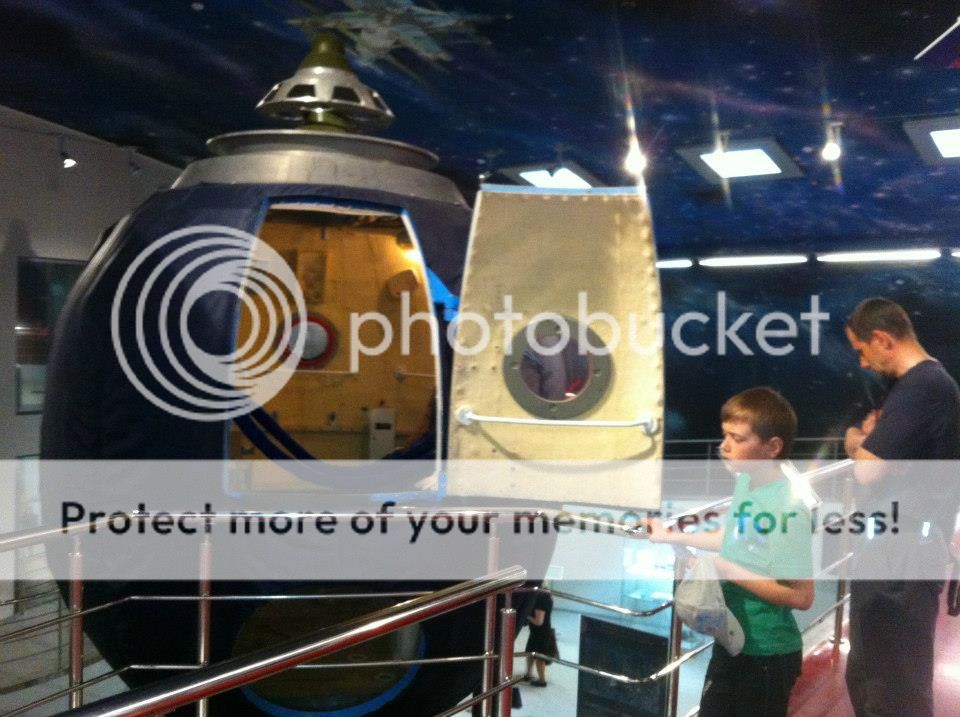


After the initial start, the Soyuz rocket separates from the craft and falls to the Earth. The driving task is now left in the hands of the pilot duo sitting in the middle module of Soyuz. Here is also everything computerized as well as its relative in digital technology. Just like two cosmonauts sitting in a pair of deck chairs. The reason why I put here three photos from the museum is simple and is not religious. I haven’t been able to select one and therefore, I decided to give you all three as a present.


Of course, the next photos are also taken in the Space Museum, as well. You are looking at the propulsion jets of rocket engines. And rocket is responsible for driving Soyuz to meet Mother Salyut. And the drive is magnificent and amazing. The drive goes through numerous elliptical circles around Mother Earth where the Earth control center coordinates with this complex maneuver, maneuver of a close encounter with mother Salyut and child Soyuz. I hope you realize now from where the name Soyuz 3 is coming - the spacecraft consists of three modules. And don’t panic, this has anything in common with religion or maybe have, who cares?


Let’s now discuss advances used in space orbital station construction and control. First orbital Soviet stations, as well as American Skylab, were assembled from components of cylindrical and spherical shapes arranged in a row. Even by itself, each component is designed in almost perfect shape, in final it results with a limited room for storing cargo, supplies, utilities, and crew. Therefore, the Soviets constructed extensions and inserts that enable modular stacking and better use of internal volume bounded by external dimensions. As such the final shape starts to be much more complicated and structures are extended to use all three dimensions of inner volume. Advances here were for the first time used in constructing the Soviet orbital space station Mir.


The next photo is also taken in the Space Museum and shows the construction frame for advanced and fully computerized control for space pilots, regardless control is on a spacecraft or space scooter for riding through space.

Among numerous artifacts, one of the most interesting places in the museum is for sure the original Space Control Center. Here you can sit and enjoy in Big Brother show which was during 16 years record inside and around the Mir orbital space station. Everything here is original, starting from the computer and LCD technology, Windows environment is older and incomparably more sophisticated and better than Microsoft or Apple will ever be. The reason is you can’t manage to play with CTRL+ALT+DEL in solving technology problems because you’ll crush the station, and Mir is unstoppable rushing towards Mother Earth.
If you ever visit the museum, my recommendation here is to take a break, bring with you a coffee, and relax and enjoy watching original films about cosmonauts' life in space and their conversations as well as with Earth Control Centre. This is the coolest coffee shop in the whole world where you’ll be feeling like a part of this glorious story. Fantastic and invaluable!


Mir space station era


Cosmonauts in all Space Orbital Stations mainly spend time in the control module, the brain, regardless working in shifts in other modules as well as in an open space. In the second phase of the Mir project (1991 – 1996), the number of crew didn’t change but astronauts from other nations and states joined to program.
Mir 3 - third phase (1996 – 2001) was an unplanned extension that entered into the era of Russia nowadays. In that period western nations and states fully joined the program. Such Mir became a mother for what we today call the International Space Station program, a program that started in 1998 and is lasting up to 2020. The purpose is to develop a complete technical and human infrastructure for man's journey, first to Mars and then much farther away.
Unfortunately, during the last period, the Mir space station befell a place with a lot of accidents mainly caused by the deterioration of embedded techniques and technology expressed in general malfunction and equipment failures. Mir space station was designed and built in a way that everything can be changed and replaced, everything but not the brain, the command module. The command module and its complex electronics were not designed to last for a long period but only five, maybe ten years. And module with its electronics was ambitiously used over fifteen years of which twelve with man crew, in the end, became a problem.
But regardless of its glory and misery days, Mir space station was and still is one of the heights the human mind has in all times. During the exploitation period, Mir was a laboratory for a lot of different scientific experiments which, among others, included raising plants in the space. The significance of these biological experiments is not only in simple food farming but in oxygen production, as well. Plants on the light produce oxygen using carbon dioxide and such can solve the issue of oxygen reserve required for the male crew during long-term long-distance space journeys as well as consume carbon dioxide which is a by-product of human and animal breathing. And this, when the time comes, may be a way humans design spacecraft where life for generations is possible once they sail away in the direction of stars.

Ladies and gentlemen, let me present to you one of the heights not only in the Space Museum but one of the objects mankind ever has created. What you see is not the fake, it is the original Mir space station.

Let’s start a drive through the command module. What you see here is the brain, the place from where you control and manage all functions of the space orbital station. There are two fixed chairs, just like in the plane. Because of zero gravity, cosmonauts are sitting on them strapped not to float away. Of course, the cabin you see here is naked almost to the skeletal, without additional utilities, wires, bags, and stuff which were hung around fastened to the inner shell to avoid floating in a cabin without gravity. Here you see computers, commands, LCDs and others here are original from that era. Remember, we are still in the 1980ies when Mir was launched which means the construction and design were in the late 1970ies. The boy in me is excited and the grown man sitting inside me is smiling: "Cool, cool, cool!"
The photo below is taken outside the command module. As you can see, the space station is plated with solar panels that feed control instruments with power and electricity. On top of that space station had a complete system of power wings and surfaces. At the top of the command module, you can see a module with windows through which cosmonauts were able to observe the Earth and the Universe, as well.


Now look at the back of the cabin. On the left side you see the very private and intimate corner of the space station whose function is obvious, isn’t it? Beds or better say drainage networks with sleeping bags are just the opposite. In between are doors that lead into other modules.
Below is the small window to look at the Earth, Sun, Moon, Stars, and Universe. When you are in the open Universe, you are exposed to radiation and therefore you must be very, very much protected. Mir space station is extremely protected but as you can see, a small room with the window is additionally separated with a special curtain to minimize the radiation effect because of the window. Just like the window space at the top of the command module.


Even though every function on Mir was computerized, engineers still kept manual options, mainly for vital functions. And this is how it must be, just in case there is a crap/bug in the software or a malfunction with the electronic component happen.
Some additional help and control tools with help and control buttons. This is instead of CTRL+ALT+DEL in today's computerized systems.

Yeah, the big guy is again spotted from the front side. While circling around the Earth this part of the Mir was for the most of time facing Earth. Maybe it sounds pretty crazy, but this was designed for safety reasons to enable undisturbed communication from the Earth control center with the crew in space as well as for supervising all functions in the space orbital station during 15 years of its existence.

Mir was an enormous, big, and long-life space orbital station. Therefore, the station had to be capable in producing energy by itself. And the way how to ensure that are solar panels. This is a photo of one of the original modules for collecting energy. Isn't that cool?
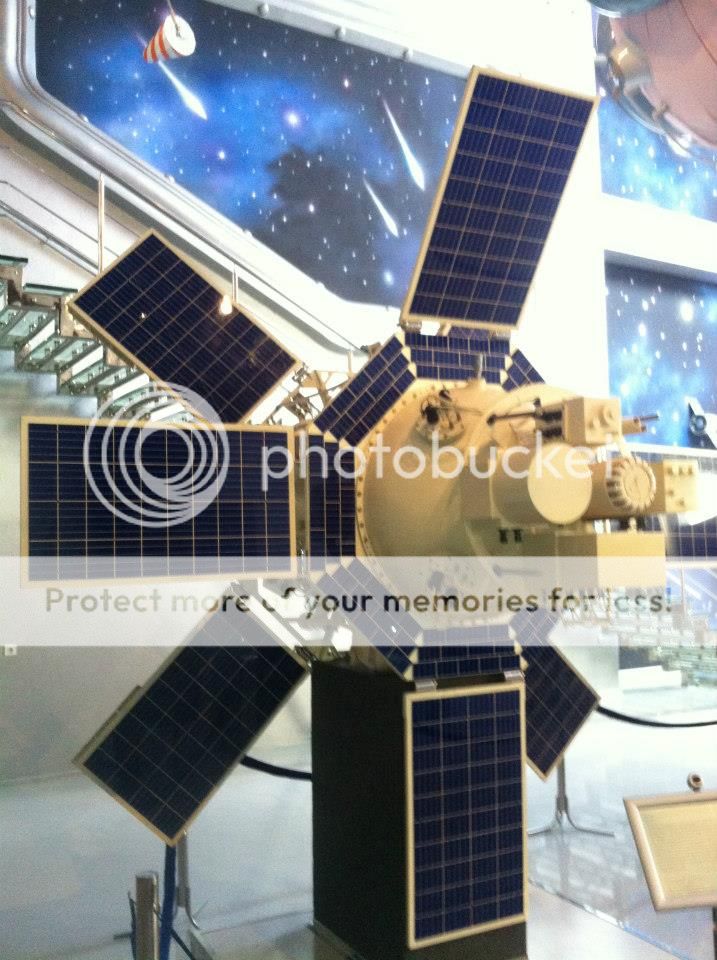
After a short introduction to the brain, let's now explore other parts of the station. At that time Mir space station was enormously big. Therefore, if for some reason cosmonauts must work outside, on some distant module placed outside the station, they use a vehicle, a special craft, to get there. The craft is simple but efficient. It has small rocket engines which safely drive cosmonauts and cargo to the target area.

There is no labor possible without a tool and therefore, you have a bag with the tool. And don't laugh, even a tool looks and seems ordinary because this tool is not. This tool was used inside Mir as well as outside, the space. Cool, isn’t it?

And be careful, when driving in the vehicle in open space you have to take a special position otherwise ... you’ll float out into the Universe.


When working outside you wear a suit which protects you from radiation as well as ensures breathing. To be sure you'll not float away special magnetic boots keep you safely connected with an outer shell of the space station.

And now let’s focus on the food cosmonauts are eating. Here is the short story of what and how to eat in the space. It is not a question of how much and how often because, if you don't learn technique how to eat, you'll stay hungry. Even though most of the food is compact you still have a spoon. Forks and knives are not needed and even cannot be used, at least not for this kind of preprocessed food.


When Soyuz or a robotized space vehicle delivers supplies, you receive a container of fresh food: vegetables and fruits. This is necessary because processed food cannot be substituted for an original one.

Now take back a look inside the command module. Here is the dining table with a food supply just served for the meal. And do not forget in a plastic plate inside the table construction a real food supply for the whole squad for one day. Cleaver, isn't it? In the space, you don't eat much because too much food will make you sick. Such people are really monkeys because they never learn obvious things to keep them safe and sane.

Is that the dining table? Yes, it is. Ohoho, but there is a crap in the system. And guess who is the intruder? Why all over the world idiots always are employed to be museum guardians? Crappie.

Some original photos from space orbit life.

To stay in good condition, you must exercise constantly and in space medicine have to control your health in real time. This is especially required after taking food. Why we ordinary people do not learn this simple fact from cosmonauts? I'm pointing at the word "exercising" because when we came to visit doctors, it was almost too late.

In the space orbital station, Mir cosmonauts were by the program raising different kinds of plants, for food as well as for oxygen production. This was part of the scientific research to prepare human to fly on other planets of the Solar system and to fly on other star systems with more than probably their planet systems. Believe it or not, you may think of that as fiction but a day will come and man will start a journey to the stars because this is definitive human destiny.
In addition, you can see a small presentation of what was breaded in the space. Of course, these are models but are based on the real plants built in the space. In any case, this is interesting, isn't it?


Do you remember the accident in which three Russian cosmonauts were lost/captured for several days in Siberia? This is the simulation of the place they found them with the original landing module.
The second photo is not one of the best qualities but can serve to illustrate the purpose.


On this dashboard, all non-Soviet/Russian astronauts were joining to Mir program through the years. On the screen, you can see all countries and highlighted astronauts from the United States.

Mir space station era
On 30 September 1988, many readers of the Pravda newspaper - the official mouthpiece of the Soviet communist party - could not believe their eyes. Published somewhat inconspicuously on the second page, there was a photo depicting the familiar shape of the US space shuttle, but with Soviet insignia on its wings. Finally, years of rumors about a Soviet "copy" of the shuttle had been confirmed. However, the official Soviet press was quick to point out that despite its superficial resemblance to the US counterpart, the Russian shuttle, dubbed Buran or "snowstorm", was better and more capable. Within days, the new ship got a chance to prove it.
On November 15, 1988, as snowy clouds and winds were swirling around Baikonur Cosmodrome in Kazakhstan, the Buran orbiter, attached to its giant Energia rocket, thundered into the gloomy early morning sky. Three hours and two orbits later, the 100-tonne bird glided back to a flawless landing just a few miles from its launch pad. Despite the kind of strong winds that would rule out any launch or landing attempt by the US space shuttle, Buran touched down just 3m off the runway centerline. And this planet-wide ballet was performed with its "pilots" safely on the ground.
Buran's pioneering mission was the culmination of an effort by more than 1000 Soviet institutions which, since 1976, had secretly labored on this largest of Soviet space projects. Upon the spacecraft's triumphant landing, the Soviet newspapers promised a new era in space exploration. Few could predict at the time that it would be Buran's only mission. Unlike NASA, Soviet developers never had any grand illusions about replacing traditional rockets with reusable space trucks. Instead, the Soviet shuttle was conceived primarily as a "symmetrical response" to the perceived military threat from America's winged orbiters. Years after a skeptical Pentagon had given up on the shuttle, even as a delivery truck for spy satellites, the Russian officials continued whispering to journalists that the US orbiter had a secret capability - to make an undetected "dive" into the Earth's atmosphere and suddenly glide over Moscow dropping nuclear bombs.
Never mind that such a scenario was not supported by physics or by common sense. Energia-Buran's chief architect, Valentin Glushko, hardly tried to educate warmongers at the Politburo about the questionable merits of the reusable orbiter as a weapon. Glushko was one of the first generation of Soviet rocket pioneers, who were experimenting in the 1930s under the tutelage of Konstantin Tsiolkovsky - one of the "fathers" of spaceflight. Like many of his contemporaries, he had little interest in designing weapons. He did dream, however, about building a permanent base on the surface of the Moon. Unfortunately, after losing the Moon race to America in 1969, Soviet leaders had little appetite for another deep-space adventure. Still, Glushko probably hoped to exploit Cold War paranoia about the threat of the US shuttle as an opportunity to lay a detour road to the Moon, and possibly even to Mars. Glushko carefully steered the Soviet shuttle project away from being a carbon copy of the American design, which could not be easily modified. Instead, he proposed a winged orbiter along with a fully functional rocket that could carry any cargo - including lunar landers, orbital tugs, and even pieces of a Martian expeditionary complex. In the end, Kremlin bosses had committed to the monumental expense of money and human talent with only vague hopes that real tasks for the grandiose vehicle would emerge as it came online.
Instead, after long delays and cost overruns, the Buran appeared on the scene in the last act of the Cold War and amid a crumbling Soviet economy. The Berlin Wall had come down just a year after its first flight, and the Soviet Defence Ministry was suddenly more preoccupied with resettling thousands of troops returning from Eastern Europe than with servicing orbital anti-missile platforms and deploying killer satellites in space. The collapse of the Soviet Union in December 1991 sealed the fate of the Energia-Buran system.
When Russia joined the effort to build the International Space Station (ISS), there was a flicker of hope for Buran's giant booster- Energia. Still unfinished today, after a decade of efforts and dozens of assembly flights, the ISS could have been hauled into orbit by only a few Energia boosters, had international partners adopted it into the program, say the rocket's proponents.
In the mid-1990s, a flight-ready Buran orbiter, which made the historic trip in 1988, had been mounted on the back of a fully assembled Energia rocket at Baikonur's Building 112. This eye-popping display became a popular stop for journalists and foreign tourists, who periodically "invaded" Baikonur for high-profile launches. To the untrained eye, the gargantuan rocket and its orbiter looked all but ready for a rollout to the launch pad.
In 2001, this spectacle, combined with the optimistic and mistranslated comments of a Russian guide, had such a profound effect on one Western reporter that he filed a story claiming that the Energia-Buran program was about to be re-started. The article proved that a decade after its demise, the Buran had already become a legend. However, if one looked closely in Building 112 it was possible to see water dripping from the high ceiling on a rainy day and accumulating on the floor, under the dead torsos of Energia rockets. The facility keeper, who showed reporters around the building, said that he could hardly find money to send repairmen to patch up the giant roof. Eventually, a repair team believed to include eight people, did make it to the roof, climbing on top of Building 112 on May 12, 2002. According to eyewitnesses, at about 9:20 local time, the entire structure shook violently as if hit by an earthquake, and enormous pieces of debris plunged dozens of meters to the ground below. They obliterated this crowning achievement of the Soviet space program.
However the Energia-Buran program did leave a lasting legacy. The cavernous launch facilities at Baikonur and a state-of-the-art mission control center in Korolev have continued serving the Russian space program and its international partners. The rocket technology developed for Energia-Buran has been used in other launchers. A mighty RD-170 engine, originally developed for the first stage of Energia, powers the Ukrainian Zenit rocket today. This engine's scaled-down descendants - the RD-180 and RD-190 - have been adopted for the US Atlas booster and Russia's next-generation Angara rockets.
While the US space shuttle will soon share the fate of the Buran orbiter - as a museum exhibit - emerging plans for lunar exploration have revived concepts of super-heavy rockets, on both sides of the Atlantic. If they are ever built, their creators will have to re-trace the path once made by Valentin Glushko and his colleagues.


Buran exhibited in Technik Museum Speyer, Germany,
(Russians sold the Buran in the year 2011)

Buran exhibited in Gorki Park, Moscow
The way how children can enjoy and breed their dreams
Mission to Mir
Put na Mars: Epilog i novi početak
I tako dragi moji, dođosmo do kraja jedne od najfascinantnijih priča svih vremena, priče o čovjeku i njegovim snovima, priče o vraćanju krojenima odakle smo mi ljudi potekli. Jer koliko god se i znanost i religija i filozofija trudili da nas svrstaju na Majčicu Zemlju, čovjek iako rođen na Zemlji, svoju pravu domovinu ima u Svemiru. Stvar je to u koju ne treba vjerovati jer vjera ovdje i nije potrebna. Treba samo slušati intuiciju i gledati u zvijezde. Baš kao što su to činili svi akteri u ovoj priči.
I baš kao na svakom kraju, treba se najprije podsjetiti početka. Autor ovih redaka se je potrudio da na internetu nađe originalne filmove koji ne predstavljaju propagandu. Pa je tako našao jedan uradak koji je nekako najbliži istini. Film je to o Vostoku 1 a sastavljen je iz niza isječaka pokupljenih sa interneta, i ne samo od Vostoka 1 već i od ostalih. A sa filma je skinut zvuk. Na žalost, ostala je boja koju je sovjetska propaganda 60ih godin 20. stoljeća naknadno nakalemila na original odijela koje, barem što se Jurija Gagarina tiče, nije bilo crveno već bijelo. Prvi moderni sovjetski kombinezon nosio je pak German Stepanovič Titov koji je 6. kolovoza 1961. godine letio u orbiti oko Zemlje puna 23 sata i 18 minuta za koje vrijeme je Zemlju obišao 17 puta dok ju je Jurij Aleksejevič Gagarin obletio samo jednom. Bilo je to povijesnog 12. travnja 1961. godine. Par godina kasnije, 18. ožujka 1965. Aleksej Arkhišovič Leonov je kao prvi kozmonaut iz svemirskog broda izašao u otvoreni svemir. Njegova povijesna šetnja trajala je 12 minuta.
Nakon filma, pogledajmo podsjetnik na sve sovjetske i ruske kozmonaute koji su sudjelovali u svim misijama od 1961. Do 2001. Godine kada je orbitalna stanica Mir prizemljena.


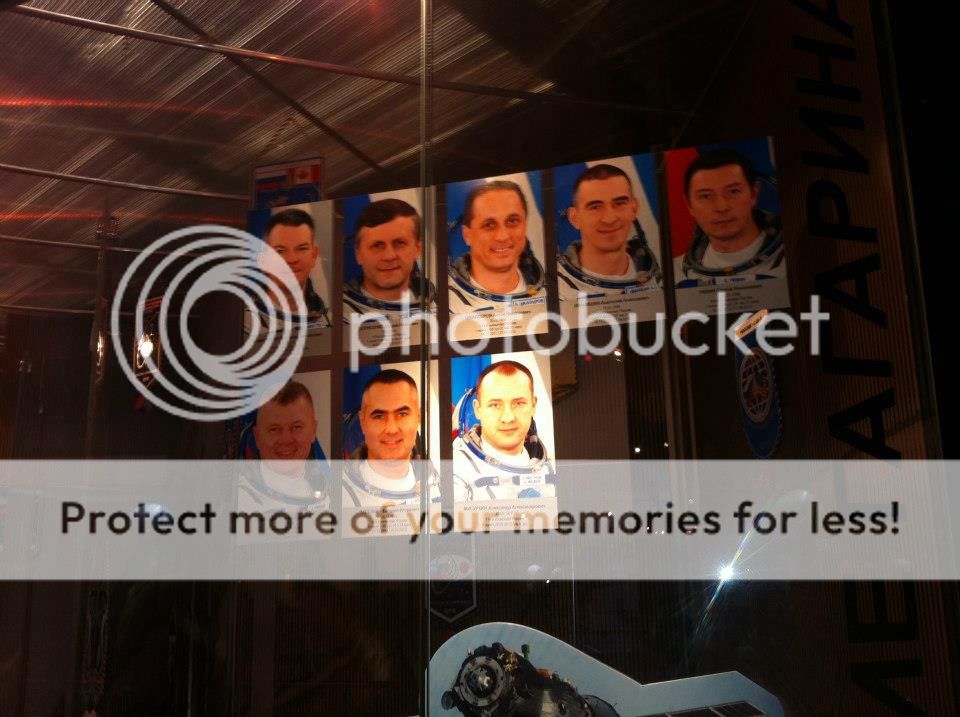
Još jedan kratki podsjetnik na glavne zvijezde programa zvanog orbitalna svemirska stanica..


I na kraju par slova o budućnosti koja je počela paralelno sa zadnjom fazom života orbitalne stanice Mir, a u kojoj danas sudjeluju združene snage Rusije, SAD, Kanade, Europe i Japana. Budućnost je počela 1998. i trebala bi trajati do 2020. koliki je predviđeni vijek eksploatacije, istraživanja i treninga u Međunarodnoj Svemirskoj Stanici (International Space Station). Nakon toga bi trebala započeti izgradnja letjelice koja bi ljudsku posadu trebala odvesti prvo na Mars (let je predviđen do 2033. godine) a zatim mnogo mnogo dalje i dublje u Svemir. Osobno sam uvjeren da će se to i ostvariti.
The end or to be continued
Oznake: Space oddity
srijeda, 22.05.2013.
Space oddity - The coolest mankind oddity of all times (part 1)

There are lots of places worth to be seen when visiting Moscow. The most common places visitors usually select are Red Square, the Kremlin, and Saint Basil's Cathedral. If they have more time to spend, they visit some other places (Moscow: 10 Things to Do). But there is one true place which, whatever you think, is the coolest one to visit. This place is directly connected to stars not only in Moscow but also throughout the entire world. The location is on Prospekt Mira 111.
http://www.space-museum.ru/
As a young boy, I dreamed I was flying through space. I was looking at the sky to find a star that was waiting to be discovered by myself, the star that was created just for me. Today, some boys share the same dream. They are touching fallen asteroids exhibited in a museum and they have a dream. And if they are focused on and have a strong will, they may realize their dream. The photo album you are watching is part of or similar story. The never-ending story of humans, their dreams, and their home because ... Space is our true home, isn't it?

When started making satellites and spaceships, engineers were always making them in, at least, a pair. You know, if something bad happens, they will have a reserve. Very clever. As such, in today's world, we have the luck to see the originals in museums. And guess, reserve or replica for which legendary satellite is the very first one built and launched into Space? Yes, this is an original Sputnik 1 exhibit in the Space Museum in Moscow.

The following one was also one among beginners. It was in the beginning of the Space era and happened' during that early time, end of 50ies and beginning of 60ies.

Just like the previous, this is also the original one, too. The story he tells is about just another artifact in Cosmonaut's museum in Moscow. Isn't that cool?

Whatever happens with the Soviet/Russian space program, this era is for sure the part of the history on which they have to be proud because ... They opened a new era in the history of mankind. Would you believe that this little guy, sitting below the big one was their first module that landed on the Moon? His mission was only to tell us: "Hey guys, I'm here! “

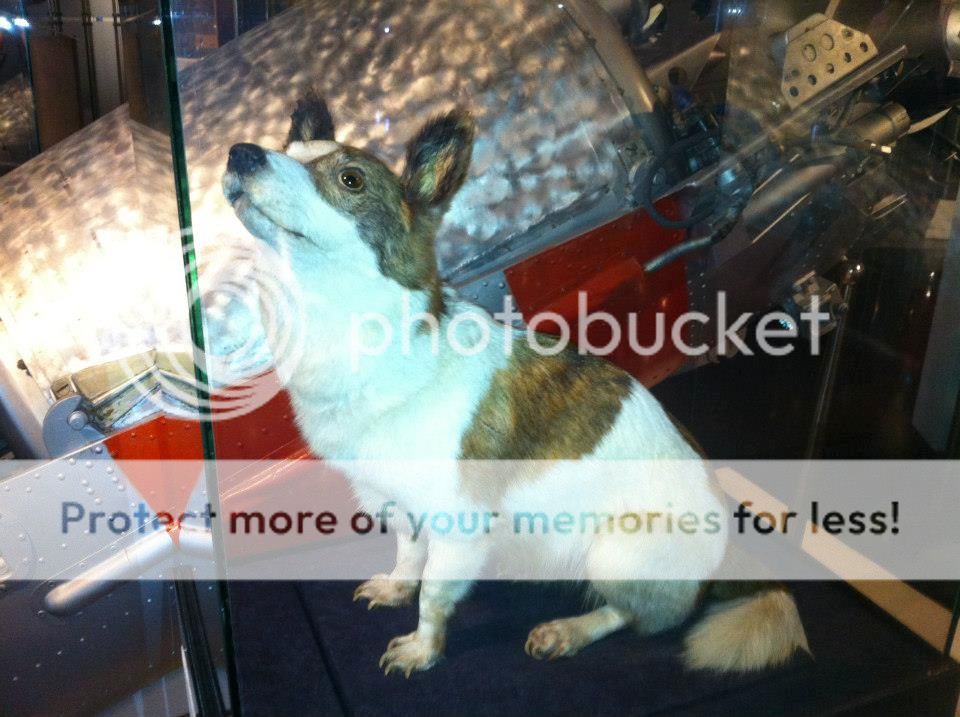
Before sending humans, the Soviets/Russians were sending dogs. Famous Laika is not preserved... Little Laika unfortunately paid tribute to the development of space technology and landed in the form of slurry. Sadly.

But here are Belka well preserved and stuffed...

... and Strelka. Who knows would these little creatures ever forgive mankind they've been sacrificed for experiments even in such a way they become immortal. In any case, what you see here is for sure cool, very cool, and believe it or not - the original!
And now, the turn is on man. This is the first Soviet/Russian space suit model. And this very fashion model was tailored especially for one guy. His name is Juri.
Juri was not a tall guy and at that time, each suit was specifically tailored for each cosmonaut individually. Well, what to say on just one another original in the museum?

Do you recognize this spaceship? This is the twin brother of the first one in the history of mankind. And guess who was flying inside this tin can?

No one is immune to excitement and fear. Therefore, for scientific purposes, when flying through space especially in that very early and first time, astronauts were under special treatment. This is the original electrocardiogram as a memory for the first flight of the first men's trip to the open space. And as you can see, Yuri was obviously excited. So who would not have been at his place?

I believe this photo does not need additional explanation. You are right and your answer is correct. This is a small guy who becomes a big hero not only for his nation but of the whole world ...

This is the first photo of the Earth taken from space. This is a very precious memory in black and white technique.

Well, this artifact is part of the history. The coolest part of history and in the year 1961 because ... Yuri Gagarin landed on the Earth in a module like that. Together with the module above, it was called Vostok 1.

People like watches and are ready to pay a lot for some of them. But, even though there are lots of expensive watches manufactured by cool brands, the most coolest and valuable ones are not special and even not expensive. This is a photo of the original artifact belonging to small Yuri. This watch it probably has the highest value among all watches of all time and as such will probably stay forever.

The first pencil ever done is patent of one Croatian guy but ... Do you wish to write with this pencil? Guess who the owner was and where this pencil was traveling through. And do you think you have money to buy it? I doubt it simply because this is the first pencil in Space.

Valentina Tereshkova, first women in the Space.

This is a Russian space suit, an advanced model. In comparison to older ones, this is for sure fashion stuff at least because of color. The original model who was carrying it on the space runway was Valentina. What to comment but: “Women like fashion.”

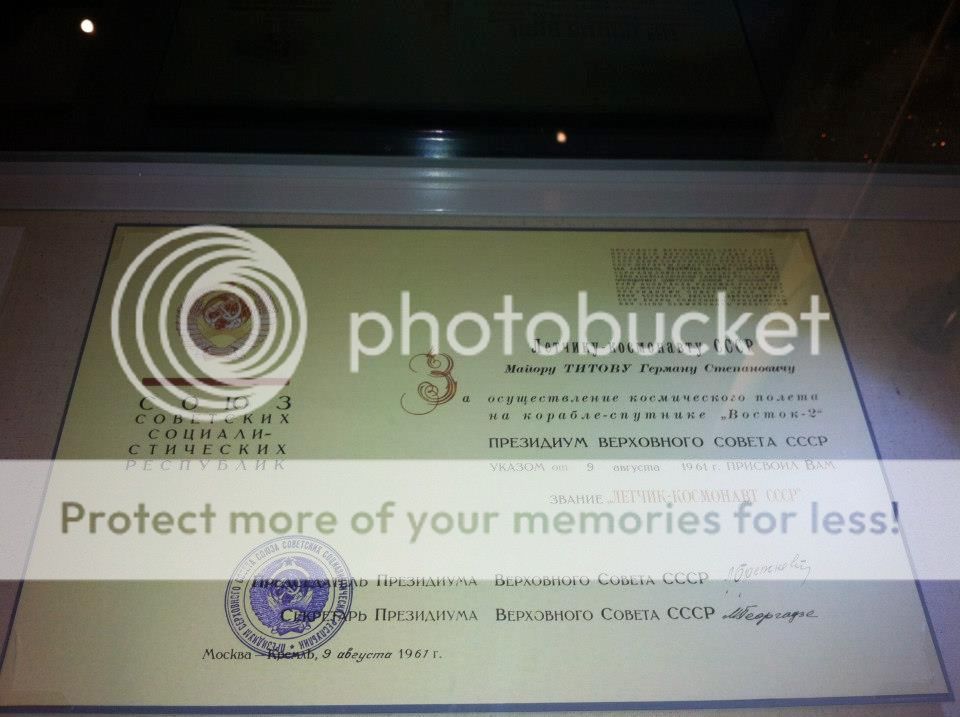
This is a poster with German Titov, just another Soviet/Russian famous space guy.

What you see here is the original edict of honors given to German.
Once John Lennon said Beatles were more popular than Jesus. It was in the early 60ies when they were causing hysteria and screaming wherever they go and play. But believe me, this is not true. In that time these guys were much more popular not only inside the USSR but outside, as well.


When I was a boy my favorite TV series was the famous "Lost in Space". It was cool watching the adventures of astronauts and crazy robots in the environment of unknown and scary space creatures full of uncertain mysticism.
But do you think this is also cool? Can you imagine this traveler module landed on Mars? Well, no but this stuff did it or even was intended to do. What makes the stuff great is the very early model of solar cells in the form of a collector supplying spacecraft with additional and constant energy. After a lot of trials and mistakes, the Soviets/Russians finally reached and land on the Mars in early 70ies.
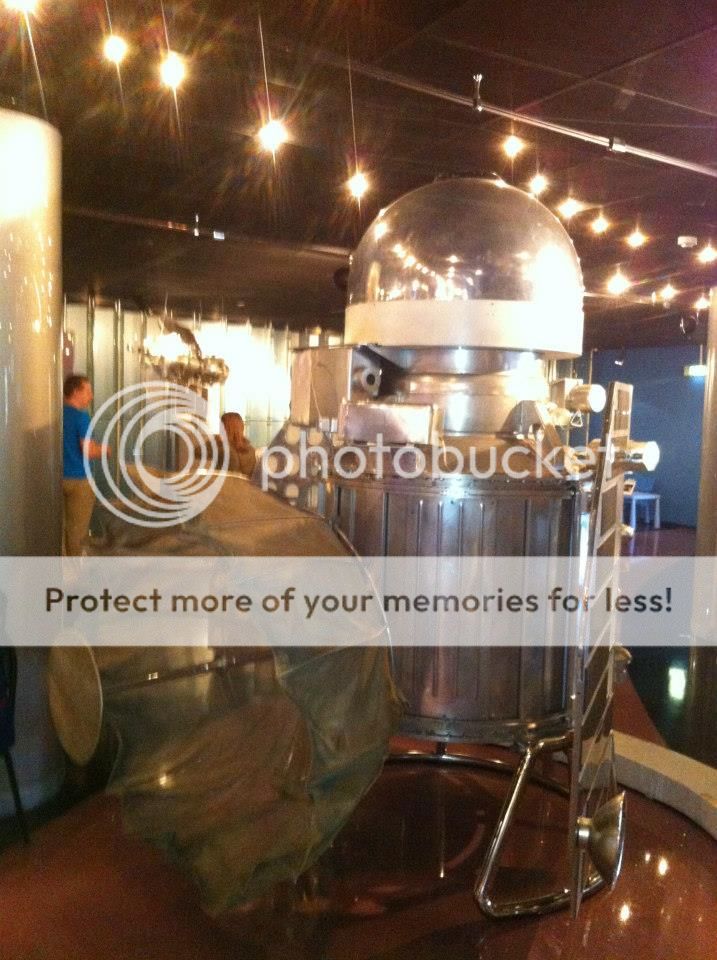

Sergei Pavlovich Korolev was the main Soviet engineer involved in the construction of the Soviet space program. Of course, a lot of engineers and clever people were working on this program but the history and glory, as we all know, always goes to one, to the leader.

Sergei's notes on space program projects from these pioneers’ years of glory.
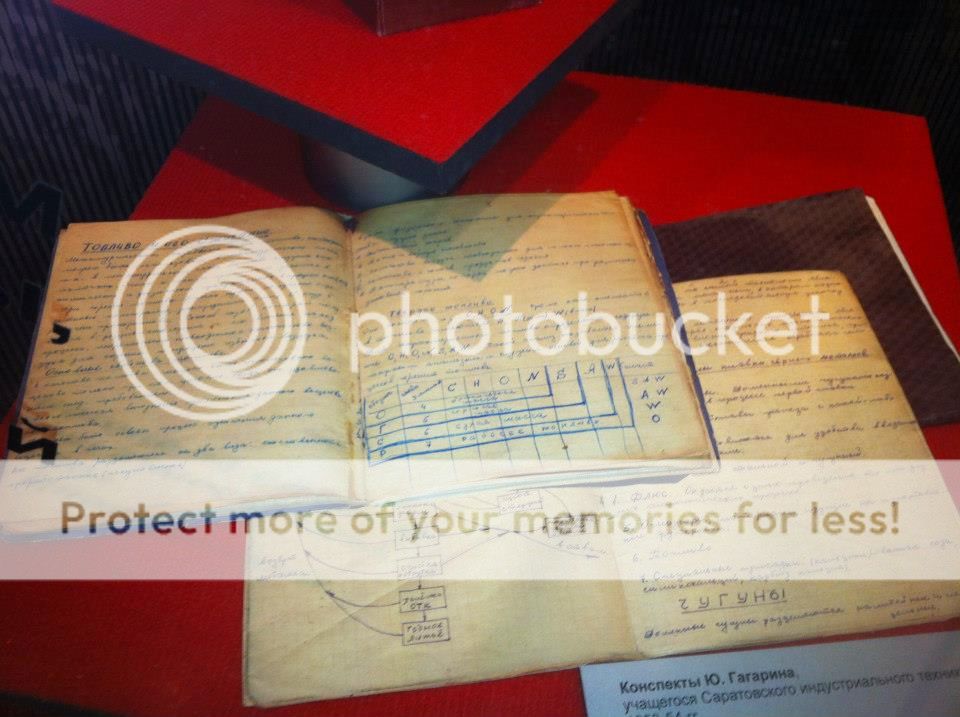
There are lots of phones in the world which are valuable or special. Of course, the first-ever build has no competency but ... This is definitely the coolest phone in the world of all time simply because via this phone Korolev was speaking with Juri and other cosmonauts. The photo isn't excellent but...

As we all know Soviets lost the race in outer space, and the Americans beat them. They sent the first man to the Moon and the whole Apollo program, especially starting from Apollo 11 was magnificent. I remember these glory days when we all gathered in front of the TV to watch live TV broadcasts from the Moon. It was so exciting and promising. Just like the whole space era caused by the competency between two superpower forces in the World of the 20th century.
Yes, Americans sent the first man into orbit around the Moon ... But ... the Soviets / Russians sent and landed their first lunar module. Afterward, Americans send the first man, but the Soviets/Russians send the first independent lunar vehicle, a robot. And just like in science fiction, the principle of movement and understanding the environment was done by what becomes a nucleus later called artificial intelligence. Isn't that cool? Therefore, they have not been beaten completely by Americans. They just didn't have enough resources to follow the Space race because of their limited economy and problems caused by military competition with Americans. Even though the following photos of original artifacts (remember, the original ones were lost but engineers always make spacecraft in twins or triplets) are photos of the original replica.


Ladies and gentlemen, this was the short story of pioneers but, it’s not the last one. In the next episode of Moscow Space Museum and its artifacts, I’m leading you into a new adventure that lasts to nowadays. This will be the adventure in the orbiting space station which, believe it or not, in the next years will be a springboard for a man's journey into space. For the start it will be a journey to Mars and then probably much far, far away.


(Continued)
The end or to be continued
Oznake: Space oddity
U fokusu
Kutak kazala koji informaciju daje što bit' će objavljeno skoro, sve kako pučanstvo ne bi zabludom lutalo jer u mraku se obično ništa pametno ne nađe izuzev, ah tko će ga znati.

Novele iz albuma

O ljubavi sveta, ljubavi putena,
Čista i moja ti mila si jedina,
Kroz život daješ bez da se kaješ
Za grijehe koji iskup svoj traže.
Ruža je cvijeće ljubavne sreće,
Sprijeda i straga je miluju dva vraga,
Životom ona hrabro se kreće
A drekavci oko nje uzalud dreče.
Informacija kao izvor i vještina manipulacija
Predstavu javnosti ona iluzije daje
Za dan dva koliko smeće obično traje
Da bitno je biti i vješto se od sranja kriti.
Niska o vječnoj ljudskoj komediji,
Riječi o ljudskoj vječnoj tragediji,
Što zabilježi Meštar Boccacio
I vama na uvid prizora daje.
@ Bocca di Rossa
@ La Dolcenera
@ La Redenzione
@ La Partita
@ La Manipulazione
@ La Prestazione
@ La Finestra
(kraj)
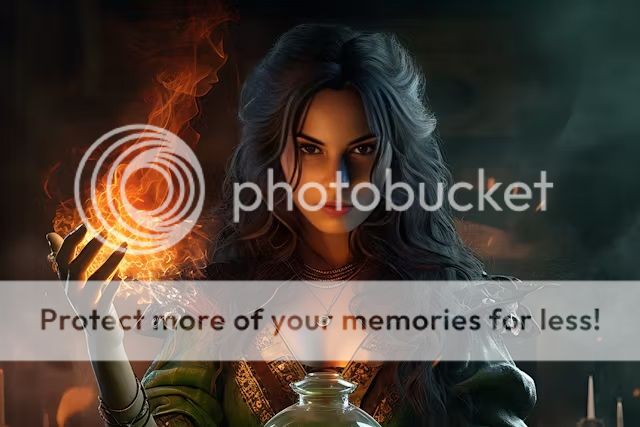
Niz novela koje spominju čudnovata uprizorenja sa zagrebačkim coprnicama štono dogode se u vremena razna, što onomad, a što sad. Novele te razbibrigu slave, a hrane znatiželju vašu što spomen metne na ljudsku pakost ali i dobrotu koja bliskošću milih duša zrači. Zabilježi, uprizori i podastre meštar Bocaccio Zagrebački.
@ Zvezdišče
@ Coprnica stuba Kapucinskih
@ Vještičje sijelo
@ Čarobni pehar
@ K Crnom Orlu
@ Tajni Grad
@ Okrutne igre
@ Sveti Gral
© Seks i grad
(kraj)
Niska optimističnih novela sa svih strana koje slijevaju na mjesta gdje najljepše je biti. Prozori su to što gledaju i katkad zazvižde melodiju što detalje poji koji ne trebaju zaboravljeni biti. Sve to meštar Bocaccio zabilježi i ukrasi tipkovnicom riječi.
© Satellite of Love
© Izgubljeni u prijevodu
© Kad najljepše je voditi ljubav
© Dražesni poljupci svibanjski
© Soulmates (Do kraja svijeta)
(kraj)
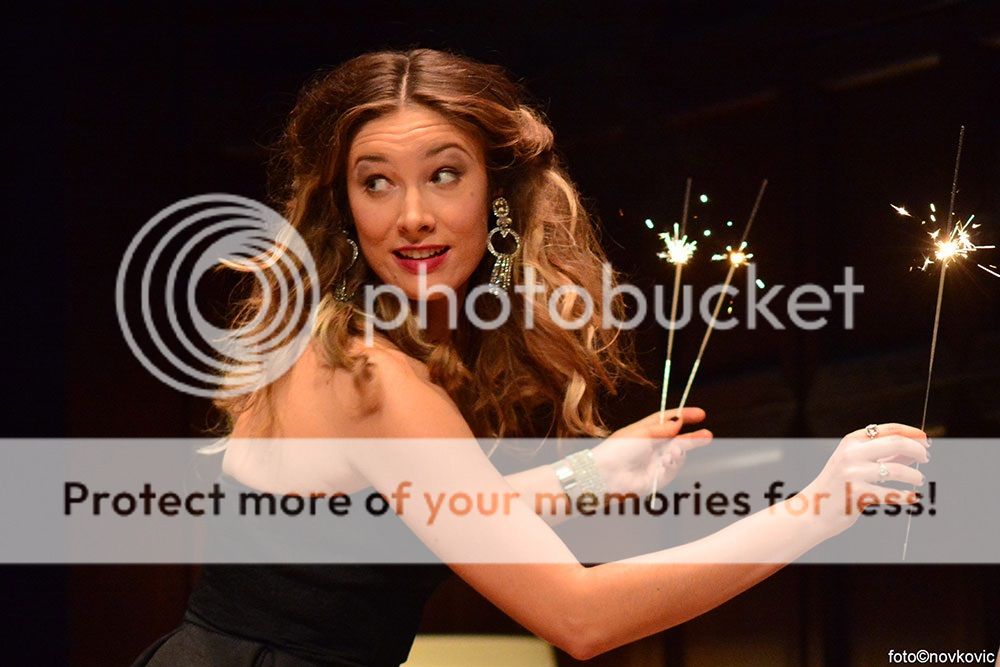
Niska novela koja poduči patera Očenašeka što i kako činiti, te ga uputi u ljudske slabosti, tajne i vline. I jošte ga nauči da one nisu Bogu mrske kako se to ponekad nekima učini, nu naprotiv da drage su, ter svašta dobrog i poučnog svijetu iznjedriti mogu. Re-Make u novom vijeku na veselje i radost, a na spomen Prethodnika Velikog koj' onomad zabilježi priliku poneku koja jošte i danas bridi, ter zabavu, a i poneku pouku daje.
© Novela prva: Soba s pogledom
© Novela druga: Kad se bistre sestre slože i olovo plivat' može
© Novela treća: Svetac
© Novela četvrta: Što jest, jest
© Novela peta: Obiteljski posao
© Novela šesta: Kako Izabela očuva čast a sebi da počast
© Novela sedma: Kato, Kato, moja ljubav, moje zlato
(kraj)

Zagrebački dekameron s ponosom metne ovaj ciklus novela erotskih koj' cilj postati hit ima ljeta gospodnjeg. Lako je to i zabavno ter štivo poućno za sve one kojima pouka il' poduka treba kao i za one koji podučavati svekoliko mogu. Za one koji se snažnima osjećaju da razabru žito od kukolja. Baš k'o što onaj reče, ljubav nikad nije tako dobro prijala kao što prija danas.
© Tramvaj zvan čežnja
© Dugo toplo ljeto
© All That Jazz
© San ljetne noći
© Kako sam postala sponzoruša
(kraj)
Bilješke jedne tipkovnice o ljubavnim i inima zgodama i prigodama sa iskustvima sajber i stvarnog svijeta koji današnjem životu definitivno uzima homo sapiensa, ukoliko ta vrsta još uopće postoji.
© Jeftini ljubavni romani
© Priča o ljubičici i ruži
(kraj)
Osebujne novele iz života vučica koje se u noćima, kad pun mjesec obasja zvjezdano nebo ponad Maksimirska šume, vode čudesnim putevima svega onoga što čini život, a što tipkovnice perom pribilježi Meštar Bocaccio vama na čitanje da dušu odmorili bi.
© Pogled u zjenicu oka
© La Mariposa ala cart
© Kako uhvatiti zlatnu ribicu (Doručak u krevetu)
© Priča o ružnom pačetu (Jedna obična priča)
© Kako prevariti vraga (True love story)
(kraj)

Štikleci novela što na neobičan način premošćuju prostor i poniru čas u vrijeme sadašnje, a čas u vrijeme prošlo, ter ne znaš što zbilja je, a što san je i što donosi novi dan Sve u svemu, ugodna zabava izvučena iz zaborava prašnjave bakine škrinjice. Novele su to za odmor, osmijeh i trunak mašte koju goni želja skrivena u tajni da ugodan trenutak poneki smjerno vam dade.
© Novela o ključiću i bravici
© Zlatokosi konjušar
© Klavirski koncerti Ewe Bonerowsky
© Evanđelje po Zorki
© Novela o Nevici i Franiću
© Kad top prepolovi dan
© Tramwajčica
(kraj)
Spomen što ga Bocaccio zagrebački metne u čast i slavu svog prethodnika fiorentinskog koj' onomad šaljive zgode perom na papir ovjekovječi, a u kojem se nalaze novele razne o šaljivim ljubavnim zgodama novovijekim i posvećenim raznim stvarima svevijekim.
© Gondoli, Gondoli, Gondola
© Važno je zvati se Ernest
© Dobro jutro Margareta
© Do re mi
© Kako pregoriti na poslu bez suvišnih zašto
© Kako konju prebrojati zube
© Čudnovati događaji u samostanu svete Basilisse
(kraj)
Jeste li doživjeli pustolovinu života? Ako jeste, neka vas ova zbirka neobičnih novela izvučenih iz prašnjavog romana podsjeti na nju. Ako pak niste, zavirite u predložak taj da bi složili vlastitu. Ne volite li avanturu nitko vam nije kriv, jer sami jadni ne znate kol'ka uzbuđenja i radosti života gubite obitavajući pod kapom nebeskom.
© Prolog: Tajanstvena karta
© Dolazak: Batangas na kraju svijeta
© Otok: Mindoro Oriental
© Plaža: Rajski vrt tropskih mora
© Plaža: Tamaraw ili povratak iz plave lagune
© Plaža: Hey Sir, do you want to buy a Massage
© Indiana Jones: Ultravox na terasi Vienna caffea
© Indiana Jones: Tajanstveni Mindoro Occidental
© Ermita, Ermita: Metro Manila na dlanu Intramurosa
© Epilog: Snovi jedne stjuardese na letu OU491
(kraj)
U davna vremena neki je pjesnik napisao da su sve velike i prave ljubavi tužne. No moraju li one uistinu takve biti? Saznajte to i provjerite, te prema osobnom raspoloženju odaberite kraj što priči značaj završetka il’ svršetka daje.
Bilježim se sa štovanjem,
Bocaccio.
© Toranjj
© Povratak
© Čokolada
© The Blogger
© Latice padaju
© Svi naši svršetci
(kraj)
O zgodama i nezgodama što započinju i zaršavaju u Zagrebu, a u međuvremenu se odvijaju u metropolama Europe. Uz prelijepa svršavanja koje božji dar putenosti nam pruža, saznajte poneku zanimljivost o gradovima, a koja se obično ne spominje u turističkim vodičima iako bi možda spomenuta trebala biti.
© Katarina sa Gornjeg grada
© Harvest End
© Fantastični snovi Gospodara prstenova
© Do the Strand
© Kod kuće je najljepše
Bonus:
- © Na tem Práhskyem mostě
- © Violinski koncerti u Veronikagaβe 17
- © Syrena Ryneka Warszawszkogiego
(kraj)
O balerini koja je voljela život sa promišljanjima o razlozima zašto je ponekad teško prihvatiti život u dvoje. Tople novele protkane su šalama i nekim veselim zgodama u kojima se svi prepoznajemo uživajući u daru ljubavi.
© Djevojke na fotografijama
© Portret jedne balerine
© Posljednja večera
© Labuđe jezero
© Ljubav na kraju grada
(kraj)
Novele o proljeću jedne tankoćutne vampirice koja je odlučila postati strasna žena vrele krvi u čemu je uspjela, a što zabilježi i ubaci u bilježnicu Furbijevih dogodovština novovijekih neobičnih Meštar Bocaccio zagrebački.
© Legenda o vampirima
© Hitna služba
© Sutra je novi dan
(kraj)
Čitajte pomno novelu ovu
što spjevana jest jedne Ivanjske noći
u ko'j mlađak sklanjajuć' zvijezde sa neba
ljubavi strasnoj uzdigne slavlje.
Pa kad vas na rijeku put smjera nanese,
spomen na ovu tad ćutite priču
o ljubavi koju ljuljuškaju vali,
na splavi, na rijeci, pod mjesecom sjajnim.
© Pastirova priča
© Crime of Passion (Shekespear's dream)
© Tajna receptura ili Kako se radi roquefort
(kraj)
Tri novele o čudnovatim događajima sa plavookim zagrebačkim anđelima koji su podno Sljemena Bogu ispali iz torbe i donjeli veselje u sva četiri godišnja doba, a koje prema diskretnim naputcima planinara pribilježi meštar Bocaccio zagrebački i za vijeke buduće ovjekovječi.
© Cvjetna nedjelja
© Na Sljeme, na Sljeme, na Sljeme
© Na Tri kralja ili Sve je dobro što se dobro svrši
(kraj)
Lepršave novele posvećene ljubavi o zagrepčanki koja živjela je za ljepotu što pruža je umjetnost zbog koje Pariz posta njen drugi dom.
© Ljetna razbibriga - Zagrebački fukodromi
© Prilog vječnom pitanju o tajni ženskih gaćica
© Umjetnički paviljon
(kraj)
Novele posvećene jednom ljetu i trenucima slatkim u kojima spominje se jedna djevojka koja znala je što želi a što je na svoj osebujan način i ostvarila.
© Gdje je najbolje voditi ljubav?
© Poslovni ručak zagrebačkog fakina
© Vesele žene zagrebačke
(kraj)
Storija u niski od pet erotskih novela koje pomno se i poskrivečki čitaju u krevetu pred spavanje. Od ponedjeljka do petka. Ukoliko vam liječnik prepisao je život bez stresa, vi ostavite se čitanja novela ovih poradi posebnog uzbuđenja koja bi mogla naštetiti vašem zdravlju. Ako niste slučaj taj, stupite korakom i ophodite sad novele te.
@ Dvije i po novele
© The Story
© Moja ljubav
© Čista pornografija - Tjelovo
© Može li žena silovati muškarca
(kraj)
Štikleci novela koje na neobičan način premošćuje prostor i poniru čas u vrijeme sadašnje, a čas u vrijeme prošlo ter ne znaš što zbilja je, a što san i što donosi novi dan. Sve u svemu, ugodna zabava izvučena iz zaborava prašnjave škrinjice za odmor, osmijeh i trunak mašte koju goni želja skrivena u tajni da ugodan trenutak poneki smjerno vam dade.
© Umjesto predgovora
© Žena dijete
© Ljeto je u gradu, a ribice u ribnjaku
© Dekadencija na reliju Pariz - Dakar
© Samo za odlikaše
© Mille miglia - La corsa piu bella del mondo
(kraj)
Copyright © by Bocaccio, Zagreb