| < | siječanj, 2006 | > | ||||
| P | U | S | Č | P | S | N |
| 1 | ||||||
| 2 | 3 | 4 | 5 | 6 | 7 | 8 |
| 9 | 10 | 11 | 12 | 13 | 14 | 15 |
| 16 | 17 | 18 | 19 | 20 | 21 | 22 |
| 23 | 24 | 25 | 26 | 27 | 28 | 29 |
| 30 | 31 | |||||
Dnevnik.hr
Gol.hr
Zadovoljna.hr
Novaplus.hr
NovaTV.hr
DomaTV.hr
Mojamini.tv
...made in bosna...
voile de jasmin...
contact yazza
icq# 335-760-777
odavde do zbilje nishta vremena
tad tishina postaje sve glasnija
ne stavljaj mi rijechi koje nikad nisu bile moje
ako sam u krivu shta je istina?
kako nevidljivom izbrisati ime?
kako u ljetu naci lice zime?
sve se mozhe uchiniti
ali ne i sakriti
treba naci razlog da to pokrije...
moje najmilije, ne postoji samo jedan prag
moje najmilije, chime mjerish koliko sam drag?
a srce je htjelo da za pravo da
i stvari shto bole ja napravih sam
ako sve su pravila
shta je onda ljepota?
shta su onda dushe tajne odaje?
drushtvo dobrih blogera:
makedo
jaca
shireen
prgo
price iz planine
levat
petar
nelly
rijeci...
Pitao jednom tako jednog vrli pitac neki:
Kto je ta sto je ta da prostis
Gdje li je ta
Odakle je
Kuda je
Ta
Bosna
Rekti
A zapitani odgovor njemu hitan tad dade:
Bosna da prostis jedna zemlja imade
I posna i bosa da prostis
I hladna i gladna
I k tomu jos
Da prostis
Prkosna
Od
Sna
mak dizdar
U lijepom starom gradu Višegradu,
gdje duboka Drina vjekovima teče,
ostade mi samo tužna uspomena,
ašikovah s dragom skoro svako veče.
Pa i jutros slušam pjevaju slavuji,
na Bikavcu brdu grada Višegrada.
Ustaj curo mala, ružo procvjetana,
već je zora rana Drinu obasjala.
Evo sam ti doš'o, sjedim na Bikavcu.
Slušam Drina huči, novi dan se sprema.
Sve je kao nekad, pjevaju slavuji,
samo tebe draga na Bikavcu nema.
Višegrade grade, gdje je moja draga?
K'o da sa mnom nikad sretna nije bila.
Gledao sam Drinu dok me je ljubila,
zar je naše noći već zaboravila.
sevdalinka
todor kolev
Svanulo je zlatno jutro iznad splita
Ja sam tebe gladna, prilično i sita
Ne trebam ja šečer, nisam više dijete
Prošle su me zlato, čak i tridesete
Stoput sam se ja ko' brod nasukala
Zbog tebe, zbog nas sebe brukala
Palila sam kamen, topila sam led
Sad više ne mogu na tebi je red
Varaj, varaj varalice
Znam ti osmijeh, poznam lice
Mene nećeš prevariti
Bježi, bježi kukavice
Živjela sam dvaput bez tebe i s tobom
Hajde sada idi, idi s milim bogom
Preživjet ću ja bol, zavit ću si rane
Ne pamtim ja tugu samo sretne dane
Stoputa sam ja na hridi izronila
Ranjena i bolna tebe čekala
Palila sam kamen, topila sam led
Sad yiše ne mogu na tebi je red
Slomio si sve u meni
Slomio za sva vremena
Možda sam još mogla
Sretna biti
Nekom drugom biti žena
alka vuica
Zar i svila
ljubav mila
ziva mi je rana
koncem bola po mom srcu
veze svakog dana
spavas li
dali si tuzan k'o ja
dok more sad je tvoja obala
k'o ja
trazim te budim te
ruke ti hladne
tu sam, a zivim bez nade
spavas li?
dali si tuzan k'o ja
dok more sad je tvoja obala
hej, suzice, brojanice
more ti je postelja.
prosao si sve stanice,
samo meni vise doci neces.
ja jos umirem
Bogu dusu ne zalim
od uvek, volim te, zauvek
da ti bar jednom kazem sta mi je nedelja
kad me jutro bez tebe doceka
hej suzice brojanice
more ti je postelja
prosao si sve stanice
samo ja ..
Bogu dusu ne zalim
bole nedra k'o jedra
da zivot me napusti
jelena tomasevic
Ne znam šta da radim sa sobom
Na što misli da bacim
Stvaram polako pjesmu o tebi
Gledam tvoje tijelo
Ludujem za njim
I ponavljam u sebi samo jedno
Hej poljubi me
Pa mi prste u kosu uvuci i zagrli me
Hej poljubi me
Pa se privij ti uz mene
I zapjevaj
Ako znaš
Ooooooo bilo što
Želim da se stisnem uz tebe
Da te milujem
Da ti šapućem na uho bisere
Da pričam o slobodi
Da se glupiram
Da ti kažem oh ti ludo jedina
azra
Nocni program na radiju,
u kujni su buba-svabe,
voda kaplje u lavabo,
sve je ovo bilo dzabe.
Soba puna ocajanja,
nemam kud ni da bezim,
dozivotno ista sranja,
pokraj tebe mrtav lezim.
U 2 ce cistaci odneti djubre,
u 3 ce donet jogurt i mleko,
u 6 ces krenuti na posao,
u osam cu biti daleko.
Gledas osmeh na mom licu,
nemas pojma sta on krije,
poslacu ti razglednice,
pozdrav iz Tunguzije.
riblja corba
Hej moja dusice izbaci bubice iz svoje lepe lude plave glavice,
ne budi dete
obuci papuce, dodaj mi jastuce, nezno me zagrli i ponasaj se prirodno
skuvaj mi kafu napravi sendvic lepo ugosti i zadovolji me,
hej moja dusice ostavi lutkice koje te jure i stalno ti dosadjuju
ne budi dete
kupi mi haljine srebrne lancice crvene maline i kartu do Amerike,
znamo se skoro vec 10 dana - daj mi svoj auto
i kljuc od stana.
Hej, na sveze mleko mirise dan
ptice pevaju na sav glas
jutro njise vetar
dodirni mi kolena to bi bas volela,
hej, plavo nebo zuri u stan
zuti leptir mazi moj vrat
jutro njise vetar
dodirni mi kolena to bi bas volela.
zana
Dijete u noci kao ti i ja
Dijete u noci kao ti i ja
Stranac u prolazu kao ti i ja
Cvijece na granici tone u san
Zena u krevetu kao ti i ja
Zena u krevetu kao ti i ja
dodir usana,oznojena tijela
Daleko od ljubavi,kao ti i ja
Jutro na obali kao ti i ja
Jutro na obali kao ti i ja
Napusteni brodovi plivaju lijeno
Rastocene olupine kao ti i ja
azra
istorija...
Lipanj 2011 (1)
Listopad 2010 (1)
Rujan 2010 (1)
Kolovoz 2010 (1)
Srpanj 2010 (2)
Lipanj 2010 (2)
Siječanj 2010 (2)
Studeni 2009 (1)
Listopad 2009 (1)
Kolovoz 2009 (1)
Srpanj 2009 (3)
Lipanj 2009 (1)
Svibanj 2009 (1)
Travanj 2009 (2)
Veljača 2009 (1)
Siječanj 2009 (1)
Prosinac 2008 (3)
Studeni 2008 (3)
Listopad 2008 (3)
Rujan 2008 (4)
Kolovoz 2008 (7)
Srpanj 2008 (7)
Lipanj 2008 (14)
Svibanj 2008 (7)
Travanj 2008 (1)
Ožujak 2008 (5)
Veljača 2008 (7)
Siječanj 2008 (12)
Prosinac 2007 (3)
Studeni 2007 (8)
Listopad 2007 (10)
Rujan 2007 (4)
Kolovoz 2007 (9)
Srpanj 2007 (4)
Lipanj 2007 (5)
Svibanj 2007 (1)
Travanj 2007 (4)
Ožujak 2007 (4)
Veljača 2007 (6)
Siječanj 2007 (6)
Prosinac 2006 (3)
Studeni 2006 (7)
Listopad 2006 (2)
Rujan 2006 (3)
Kolovoz 2006 (5)
Srpanj 2006 (3)
Lipanj 2006 (4)
Svibanj 2006 (3)
yazza
petak, 27.01.2006.
Mozartov dan
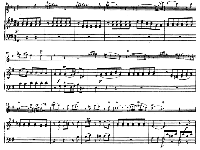
Nisam htjela objavljivati neshto vec vidjeno - svi znamo ko je bio, shta je radio, itd...Zato sam izrovila jedan chlanak pa evo vam jedan dio :) |